
Our solar systems are comprised of planets, moons, asteroids, comets, gas, dust, and other particles orbiting one or more stars, usually called suns. It was once thought that solar systems were relatively uncommon in the universe, but newer information is changing that viewpoint. Better understanding of the formation of planets and stars implies that solar systems are not as difficult to form as was once thought; statistical analysis of observable stars reveals the improbability of our being the only solar system in the nearby galaxy; and improved instrumentation and observational techniques allow the search for planets around our stellar neighbors.

Our Solar System
Our solar system, located on the Orion arm of the Milky Way galaxy, consists of nine planets (five "hard" planets and four gas giants) orbiting one middle-aged yellow star. The sequence of planets from the sun is as follows: Mercury, Venus, Earth, Mars, Jupiter,Saturn, Uranus, Neptune,Pluto.This can be remembered with the following mnemonic device: My Very Educated Mother Just Served Us Nine Pizzas. Of these planets, Mercury, Venus, Earth, Mars, and Pluto are "hard" planets (although Pluto's status as a planet has been debated), and Jupiter, Saturn, Uranus, and Neptune are gas giants.
The Planets Are in Motion

The planets move around the Sun along elliptical paths called orbits. One complete path around the Sun is called a revolution. Earth takes one year, or 365 ¼ days, to make one revolution around the Sun. Planets that are farther away from the Sun take longer. Most planets have one or more moons. A moon orbits a planets in much the same way that the planets orbit the Sun. Each planet also spins or rotates on its axis. An axis is an imaginary line running through the center of a planet. The time it takes Earth to rotate on its axis equals one day.
The MOON
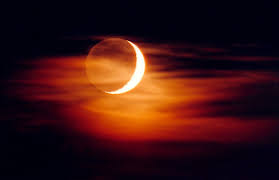
The Moon is about 238,900 miles from Earth. It is 2,160 miles in diameter and has no atmosphere. The dusty surface is covered with deep craters. It takes the same time for the Moon to rotate on its axis as it does to orbit Earth (27 days, 7 hours, 43 minutes). This is why one side of the Moon is always facing Earth. The Moon has no light of its own but reflects light from the Sun. The lighted part of the Moon that we see changes in a regular cycle, waxing (growing) and waning (shrinking). It takes the Moon about 29½days to go through all the “phases” in this cycle. This is called a lunar month.


No comments:
Post a Comment